Thursday, June 23, 2011

June 6-8


Day 1-3


What did we do today?


Today we met outside of the school and collected bags, said our goodbyes, and left for our adventure (June 6, 2011)! We waited in O’Hare Airport and boarded our plane to Los Angeles praying our bags would show up where we did. After arriving we transferred onto our plane to Auckland, New Zealand. After a tedious long flight, we made it!! We got on our bus ride to Rotorua. We stopped in the town of Matamata for lunch and some free time. I had a pineapple and ham sandwich. The town is famous for the Lord of the rings movies. After a few hours we left and headed for Rotorua. In Rotorua we went up a skyline gondola ride and went luging!! Luging is pretty much the best thing ever. J After our luging adventure we went to the hotel for an hour of free time. We went out to eat at “Burgerfuel” and I had pretty much the biggest burger in the entire world. It was called the biofuel and it was life changing. We then went to a “grocery store” called the Pack n’ Save. It was cool because we got to compare and contrast the Pack n’ Save to something similar in America, like Wal-Mart or Jewel. We walked back to the hotel and slept after a very long and fun day!
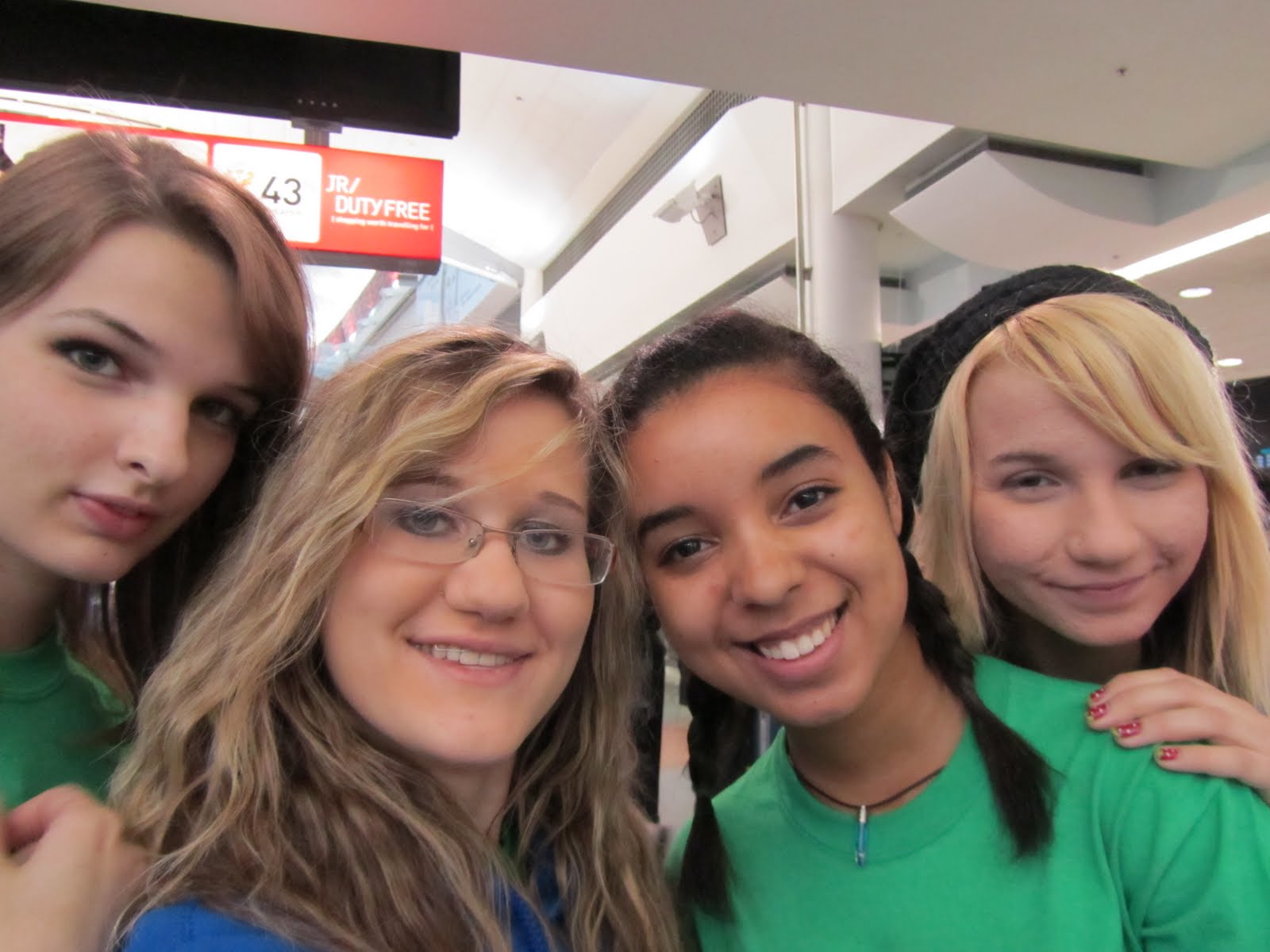


Prompt: Give a summary of events (first impression), discuss culture shock, and tell what you’re looking forward to.


Journal:


Today has been a very long day… fun, but long. We got on two planes to get to New Zealand. After almost missing our plane out of O’Hare due to technical difficulties, we landed in Los Angeles. We then flew to Auckland, New Zealand. My first impression, walking into New Zealand, was its open beauty. The air was clean and the sky was slightly foggy. New Zealand is an exciting new place; I can’t wait to see more of it! We left Auckland and began traveling to Rotorua. We stopped in Matamata to have lunch. The people seem very nice and curious about who we are and where we come from. The food seems interesting and unique. For lunch, I had a sandwich with ham and pineapples on it. I liked traveling on the bus to Rotorua; the land is so rich in color! The trees are a thick green and the earth is a rich red-brown. I loved how Rotorua is a really popular place to visit but it’s still a small town. Some of the things that shocked me were the way the people talk and the food. The food has been similar to the food in America, but with its own NZ twist. I expected communication to be relatively easy considering the New Zealanders speak English. This is not the case… We have to pay close attention to what the locals are saying because sometimes they are hard to understand. Luging was very fun today! I loved it! New Zealand is really free flowing and easy going- just all around fun! The people are very friendly and optimistic here (This, I have to say, is different from the U.S. Americans are usually nice but not always optimistic). Later in Rotorua we went to “Burgerfuel” to grab us some dinner. One of the workers, Leighton, was very nice and described his trip to America as we described our trip to New Zealand. It was a great experience. The burgers were amazing tonight! The beet root was an interesting touch to a giant burger. I love trying new things and can’t wait for more!


I’m looking forward to visiting the Whaka area and meeting the Maori tribe. I love catching onto new phrases and givin’ ‘em a go. I’m excited to see the Agrodome too. I’m really just excited for everything! What a great way to start off a trip!!

Sunday, June 5, 2011

Green Eggs and Ham: Here or there?


One thing I find really unique and interesting about traditional Maori history is the way they viewed food and cuisine. The Maori people believed “…food was noa, or non-sacred” (Maori Cuisine 1). The Maori religious places and objects had to be separated from the food supply. Any contact with the food left these tapu, or sacred, items at serious risk. People such as high chiefs, tattoo artists, or anyone else engaged in tapu work were not allowed to handle food. They had to be fed by non-tapu people. I found this very interesting because I had expected the exact opposite. I had just expected the Maori people to find food as a very cultural thing. I was shocked that they not only found it non-sacred, but they saw food as being so non-sacred that it couldn’t come in contact with anything sacred. I suppose I had expected the opposite because to the Native Americans, food was important in their culture. When a native would kill an animal, they would be sure to use the entire animal, never wasting any part of it or over killing any species. This is commonly known with the bison they would hunt. Students are often taught in American schools that the pilgrims made peace with the native tribes over a shared meal. Although food wasn’t really seen as a religious item in the Native American culture, it was still a positive part of the culture. It certainly wasn’t as extreme as food was seen in the Maori culture.


New Zealand fern- Pikopiko


I’m certainly not as afraid about the food in Australia and New Zealand as I was last year in China, but of course I still have concerns. I love trying crazy new foods and eating the cultural foods I find in different places. If it’s something I can find at home, it’s most likely not going in my mouth (within reason). I want to and plan to eat as many new things as I can. The one thing I’m concerned about is when you’re traveling, it’s very easy to get a stomach ache and not feel well after eating something you’re not accustomed to. I don’t want to be sick on the trip and I hope I feel okay throughout the trip. I think the food on this trip will be safer than the food in China. I believe that we will encounter foods in Australia and New Zealand that are closer to what we are used to eating in America. I’m excited to see what we’ll find!!

Tuesday, May 31, 2011

The Invasion of King Cane


Heard of the rabbit problem? Well… There’s more.


What is it? Cane Toads are large amphibians with large swellings behind each shoulder. They can be grey, yellowish, and olive or reddish-brown. They are normally about 15 cm long. The largest female cane toad was found in Queensland at a shocking 24 cm long. Cane toads are native to the southern United States and tropical South America. They were introduced to Australia in 1935 from Hawaii in order to control the scarab beetles. These beetles were pests of the sugar cane growing in Australia. They can be distinguished from the native Australian frogs as they sit upright and are active in the daytime and in dense clusters. Cane toads survive in habitats ranging from sand dunes to rainforests. They are the most abundant in open clearings and urban areas. They flourished in Queensland and most of the Northern Territory.


What’s the threat? Like many invasive species the cane toads soon became a problem. They have a wide array of toxins and chemical defenses present in almost all stages of their life cycle. The large glands on the back of the toads’ heads secrete the toxins. The toads will eat just about anything. When threatened, they will poison their predators and try to eat them. The population of many predators has declined. Unfortunately these predators are native to Australia. Native quolls, snakes, goannas and freshwater crocodiles may and have been lethally poisoned. Some species are predicted to adapt and learn to stay away from the toads, but it is unknown at what cost or if the species will even recover. For example the Northern quoll is now considered critically endangered. A major concern is the risk of children and pets being poisoned from contact with the toads, especially because the toads inhabit local areas.


Goannas are affected by the invasive toads -->


What to do? CSIRO has conducted research on the toads. They researched specific pathogens and tried to create a genetically modified virus to infect the toads with to help control the population. The project was shut down due to technical issues and lack of support of a genetically engineered virus. They’ve switched gears and have begun researching in other areas. There is a Cane Toad Advisory Group that offers advice and monitors the spread of the species. There are many other groups similar to this as well. Manual removal of the toads has become popular in highly populated areas and areas of important biodiversity.


What about here? The United States also has had problems with invasive species. The Asian carp has infected the Mississippi River and is traveling upstream headed for Lake Michigan. It is believed that the fish escaped into the river. Whatever the means, the invasive species is growing in population by the hour. The carp consumes about 40 percent of its body weight in plankton daily. This starves out the less aggressive species. As more native species die out due to the Asian carps’ feeding habits, the problem grows. The carps are endangering the biodiversity and wildlife in the Mississippi River. The public is afraid the situation will spread to all of the Great Lakes. If this were to happen the area would lose $7 billion in the fishing enterprise.


What did they do? One thing that has been attempted to stop the progression of the Asian carp was the creation of the electric devices. The U.S. Army Corps placed the devices in the waterway south of Chicago (links the Mississippi River to Lake Michigan) in 2002. The intention was to stop the carp by emitting electrical pulses at the water. Even though they replaced this system with an advanced one later on, scientists have still found DNA traces of the Asian carp on the other side of the system. The U.S. Environmental Protection Agency has stated their intensions to keep fighting the invasive species and keep the carp out of the Great Lakes.


Should we be concerned? Invasive species are something the world needs to be concerned with because they can severally impact and even destroy a native species. The iconic animals that are native to specific countries are destroyed as a result of these invaders. The invasive species affect the ecosystem often in negative ways. This can be seen in the situations in Australia and the United States. Humans affect the environment argumentatively too much; we should not affect nature any more than necessary.


Resources:


http://www.worldfishingtoday.com/news/default.asp?nyId=4497


http://www.environment.gov.au/biodiversity/invasive/ferals/cane-toads.html


http://australianmuseum.net.au/Cane-Toad

Rabbit-Proof and Culture Dividing


Human rights have been challenged throughout history. It has occurred in different places, different situations, and different time periods. Things such as the Manifest Destiny, the Holocaust, and African American rights have challenged they way mankind views its members. A major violation of human rights was left unchecked for a long period of time. Doris Pilkington’s Rabbit-Proof Fence describes life in the unsettling world of the Aboriginal culture during the time of the European settlement of Australia.


While the European settlers were executing the abduction of the Aboriginal children, the Australian government became a part of the United Nations. They were one of the first to join after the UN’s creation in 1942. Australia joined in 1945. When joining the United Nations a country must accept the Universal Declaration of Human Rights. This was created by the UN to protect the rights of all people in the world. Although centered on the ‘30s, the Stolen Generation policy in Australia continued on until the 1960s. During that time between 1945 and 1960 the Australian government overstepped the UN’s boundaries on human rights.


One of the first things the Aboriginal people came into conflict with was the separation of land between themselves and the European settlers. As the European settlers began moving in, “…the entire Aboriginal population… grew to realize what the arrival… meant for them: it was the destruction of their traditional society and the dispossession of their lands” (Pilkington 13). The Europeans took all of the fertile land for themselves and left the Aboriginals with insufficient farming land. This is a direct violation of the United Nation’s stand on human rights. Their policy states that all people have the “right to adequate living standard.” It also violates the first declaration of human rights stated in the United Nations: the “right to equality.” Clearly the Aboriginals did not have the same opportunities as the Europeans.


As seen in the text the Aborigine culture was violated in other ways as well. One of these ways was the way their culture was limited for growth. The Aborigines remember the “…corroborrees and songs that they were forbidden to dance and sing, unless commanded by government officials” during this time (Pilkington 16). This is a terrible occurrence. The settlers were forcing the native culture to change. They limited the culture and way the people lived their lives. This is a violation of the “right to participate in the cultural life of the community.” The Aboriginal people no longer felt like a unified culture. They were broken apart by the invaders.


The text describes how the Aboriginal “…laws [were] not… recognized by these strangers” (Pilkington 15). The European settlers didn’t allow the Aboriginals to use their laws because they wanted to be in control of the people living in Australia. Once they were the head of laws and punishments, they would control the country. The Aboriginals were punished for carrying out their own laws. They were forced to follow the settlers’ system. However, they were discriminated under this system. The Aboriginals “…expected the same form of justice under the white man’s law,” but they were not given it (Pilkington 15). The settlers violated the UN “right to equality before the law.” As described in the novel, a man came before the court saying “…that a white man stole his wife,” but instead of the action they would have given a white man, they gave the man “… a bag of flour and told [him] to go home” (Pilkington 15). This was clearly a violation of human rights.


The settlers in Australia believed they were “civilizing” the nation and that their actions were necessary for growth as a country. This was a similar thought in the United States when the European settlers were trying to spread westward. The Manifest Destiny was the American belief that it was the United States’ divine right to expand westward and control all of North America. The idea for the Manifest Destiny came even before the United States was formed. Christopher Columbus, Spanish monarchs, and the pilgrims all had the same intentions. The Native Americans were treated very poorly during the time of westward expansion in North America. Many of the human rights issues that occurred in Australia happened in America as well. The Native Americans’ land was taken from them, they were discriminated against, and were not seen as equal under the law. There are many parallels between the two occurrences in history.


There are different perspectives on every situation. The European settlers in Australia, just like in America, did not believe what they were doing was wrong. By looking at the situation of the Stolen Generation through the eyes of history, one has the opportunity to ask: Was it justified? Some may argue the Australian government was justified because it was for the children’s betterment. Personally, I don’t believe you can’t ever justify taking a child away from its mother. The pain and sorrow the families had to go through was excruciating. To express their sorrow, the families “…gashed themselves and infected [the] wounds” (Pilkington 45). I don’t think it was justified for the government to inflict that much pain on the families and subject the children to ridicule in a white society for the rest of their lives.

Saturday, April 30, 2011

S.O.R. Save Our Reefs


1. What is a polyp? What does a polyp need to be considered “coral”?


A polyp is formed when a coral larvae grows out of a substrate. The polyp is a sessile creature that has a stalk attached to the substrate caudally. Its mouth is located on the opposite end and is surrounded by tentacles. This polyp then multiplies to make hundreds of polyps. At this point the colony is called coral. When there are many corals growing together, it is called a reef.


2. What types of things are coral sensitive to in the ocean?


Coral is very sensitive to change. Slight changes in marine temperature can be disastrous for coral colonies. Even a variation of a few degrees can put stress on a coral.


3. When does coral bleaching occur?


When the temperature of the ocean increases a few degrees, the algae living on the coral (zooxanthellae live symbiotically within the coral tissues to assist in nutrient production) move to a new and more stable location. When this happens, the coral no longer has a sufficient energy source and loses its color as result of the lack of algae. This lack of coloration in the coral colonies is referred to as coral bleaching. If the temperature of the water does not return to its normal cooler temperature quickly, the bleached coral dies.


Picture: (1) Bleached Coral (2) Nearly Recovered Coral


4. Why do scientists think that coral bleaching is occurring more now than ever?


Scientists believe coral bleaching is occurring more often as a result of climate change. Global warming is affecting the sea life we have come to love.


5. List three ways people can reduce their impact to climate change?


Saving energy, avoiding car travel, and recycling are three ways we can help make a difference and help save the coral reefs.


Video #2: Why should we care about climate change/destruction of coral reefs? http://www.youtube.com/watch?v=Wcoyj2VPCOM


1. How many species of: fish, hard coral, soft coral, sea birds, shore birds

1,500 species of fish, 360 species of hard coral, 1/3 of the world’s species of soft corals, 22 species of sea birds, and 32 species of shore birds rely on the Great Barrier Reef ecosystem for survival.


2. What is responsible for warming our oceans?


Climate change is responsible for warming the world’s oceans. We are directly affecting the underwater life on our planet.


3. How does increased flooding affect the reefs and the fish that birds that live there?

Increased flooding pollutes the reef. The fish living in the area move to farther and deeper water to escape the harmful effects of the pollution. As a result of this, birds lose their most important food source. The birds cannot travel so far off the shore and cannot reach the fish.


4. List three additional ways (not listed above) that people can reduce climate change:


We can buy environmentally sustainable products, open windows instead of using air conditioners, and dry clothes on the line instead of using a dryer. All of these things can help protect the environment.


Video #3/#4: Educating children about the effects of climate change


Watch the following two videos that are aimed at teaching children about the effects of climate change. http://www.youtube.com/watch?v=RnqJMInH5yM&feature=related http://www.youtube.com/watch?v=aEdoizgeNJk&feature=related


1. List two benefits and two drawbacks to using this kind of media to teach this information.


Benefits: These videos are targeted at Australia’s children. By educating the children, the next generation will be able to create a difference and a better future. These videos are fun to watch. As one watches them, they become attached to the main character and hate to see the harmful effects global warming has on them. These videos make people want to help.

Drawbacks: These advertisements are aimed at specific groups of people. It is hard to create a video such as this that appeals to adults but is on a child’s understanding level. Another issue is most people in other nations do not see these videos. It is harder to create a difference when only a few people are aware of the situation.


Videos about the Great Barrier Reef: Please Watch!


This video would be beneficial to adults from Australia because it doesn’t give too much background information that they would most likely already know. Instead this video gives good information on how reefs provide for many different countries. Overfishing is one of the main concerns in the video.


http://www.youtube.com/watch?v=miLyqOrnwZc&NR=1&feature=fvwp


This video is would be beneficial for foreigners not from Australia because it describes the coral bleaching process in detail and without the requirement of having previous background knowledge. It explains the entire process clearly and gives advanced information on the subject.


http://www.youtube.com/watch?v=inGov_ipVKk
This video is beneficial to the tourists visiting The Great Barrier Reef. It not only provides information on the threat the reef is under, it also gives background information on the reef and the affects the reef has on the economy and on the world. These things are very important for travelers to know before they go to a new place.

Protecting the World’s Largest Living Structure


1. The Great Barrier Reef is considered the “largest living structure on Earth.” It is incredible in its size and biodiversity.

Coral is one animal that is home to millions of others. It is crucial to the survival of the wide range of animal life in the Pacific Ocean.

2. Coral can form solid tentacles to aid in feeding habits. These tentacles are made from Calcium carbonate the coral extracts from the ocean. Coral diet can range from plankton to small fish. Nematocysts, or sting cells, allow coral to capture and kill prey.

3. The coral found on the base of the Great Barrier Reef is connected and grows as one giant mass. The coral would not be able to do this without the help of red algae. Red algae act as a glue to connect and cement a coral to another coral with sheets of Calcium carbonate.


The Great Barrier Reef is an important ecosystem and provides the world with a wide variety of species and life. The reef is influential to its regional economy as it provides a wealth of tourists, products, and food.

4. The Great Barrier Reef became a national park in 1975.

This, however, did not entirely protect it from disaster though. Environmental hazards and over fishing are primary concerns today.

5. Currently, 33% of the Great Barrier Reef is protected from fishing.

The world will need to do more to do more to help save this beautiful underwater land.

6. Scientists believe the current reef is approximately 20 thousand years old. However, recent research has shown there was a reef before this one buried deep as the next generation of coral continued to grow on top of it. The ancient reef is believed to be ½ million years old.

Something so precious and so old needs to be protected.


Saturday, April 16, 2011

Children Away


An advisement letter to the Prime Minister of Australia recommending an apology to the Aboriginal people for the pain and heartache caused by the Stolen Generation.


Advisor S.


120 West Abigail St.


Sydney, Australia


5 December 2007


Prime Minister Kevin Rudd


Prime Minister


Parliament House


Canberra, Australia


Dear Prime Minister,


The Aboriginals and the westerners have been interacting since Australia was colonized. When the British came to colonize Australia they didn’t think of the repercussions their actions would have on the native culture. They knew only what they brought with them. They divided up the land, taking the best for themselves naturally, and decided the natives could move. What they didn’t understand was that the Aboriginal tribes lived in family groups and their spirits would return to the land their family lived on when they died. When the colonists moved in, the aborigines felt the need to protect their ancestry from the invaders. In addition to this, the westerners brought disease and influenza, cut down forests, and exhausted water holes. Soon “white settlers and Aborigines were at war for… land and water” (http://library.thinkquest.org/28994/abhistory.html). Aboriginals were told where to live and were not even considered citizens until 1967. [Think about that for a second… this is around the same time the U.S. was introduced to the John F. Kennedy assassination, The Beatles, Martin Luther King Jr., and Elvis Presley. The world had been through two world wars and fought for the rights of various nations. The Australian natives gained their rights only two years before NASA landed Neil Armstrong on the moon! Can you imagine such a world with so many advancements and yet so far behind?] The upset in the Aboriginal culture begun all the way back in 1788 and progressively worsened over time.


By living in close proximity with each other, the two cultures began to mingle. A new nationality was created: half Aborigine and half white. The Australians disliked the idea of this race embracing their Aboriginal heritage. In an attempt to promote assimilation, these children were taken and educated in the western culture. Gaining popularity in 1909 through 1969 the government allowed for the forced removal of children with mixed Aboriginal and white backgrounds. They were often taken by force and without a warrant. This caused traumatic stress for both the children and their families. This event was left a festering sore by history and called the “Stolen Generation.”


Being a part of the Stolen Generation completely changed one’s life. It’s not as simple as saying you’re sorry after a time out like a child. Innocent people’s lives were forever changed, never to know the original outcome. In most cases across the country the outcome of the children’s family replacement was extremely negative. In many of the cases the children were mentally, physically, or sexually abused by their new families. This caused traumatic instances and negatively influenced the way they lived their lives. Similar to the situation with African Americans in the United States, they were sold to white families and unfortunately were virtually used as slaves. Some of the kids found their way back home years later, but most never saw their families ever again.


The policy of the Stolen Generation “…broke important cultural, spiritual and family ties which crippled not only individuals, but whole families and even whole communities” (http://reconciliaction.org.au/nsw/education-kit/stolen-generations/). The policy had a lasting impact on the treatment of the Aboriginal people. As a result of the terrible conditions the children were forced to endure caused depression, anxiety, post traumatic stress, and suicide are common among the stolen. These people have to endure these mental handicaps for the rest of their lives. Aborigines still have trouble accessing adequate health care, housing, and even food and water (http://china.hrw.org/press/news_release/letter_to_australian_prime_minister_kevin_rudd). Life expectancy and the infant mortality rate of Aborigines are very poor today as well. These past actions have been carried by their bearers into the present. The Stolen Generation also feels a sense of “cultural alienation.” They didn’t find out their cultural background until later in their lives and now they do not feel they fit into their own culture. Unfortunately the westerners succeeded in wiping out the culture in this generation of aborigines.


What occurred in this chapter of the history of Australia is terrible and unforgivable. There isn’t a reason why one should not apologize for these actions. It was not moral to take these people’s lives away from them. Prime Minister John Howard stated the “current generation should not be responsible for the mistakes of the past.” If we are not responsible for the past how can we be responsible for the future? How will we learn? I believe a formal apology should be made as soon as possible. An apology is necessary for our country to grow. Most Aborigines are only looking for an apology to know that they are accepted and an important piece of Australia.


Respectfully yours,


Advisor S.


Prime Minister Kevin Rudd did issue a formal apology to the Aboriginal people for the loss and poor treatment of those included in the Stolen Generation soon after he was brought into office.


Please Watch!


Archie Roach is a member of the Stolen Generation. He began writing and singing songs about his experiences. This is his 1987 hit, Took the Children Away, which launched him on an upward musical career. He says, "I still feel the pain, every day. Sometimes it threatens to engulf me. But I'm not going to let it destroy me."


It’s a beautiful song with a good message.


http://www.youtube.com/watch?v=zLXzKYP1uCw